From Chaos to Consensus: The First Hours After a Crisis Breaks
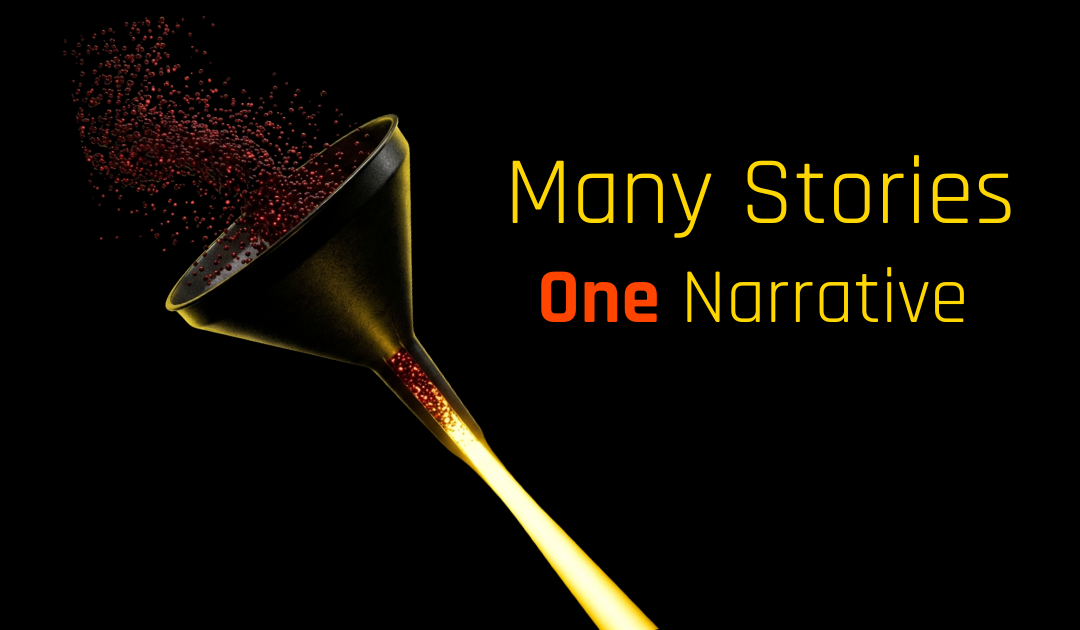
When a crisis breaks, information multiplies rapidly. Reports surface from network news, social media, independent commentators, and official sources. Early details are incomplete. Some contradict each other. Interpretation often moves faster than verification.
The volume creates pressure. Most people want orientation. They turn toward familiar sources, not necessarily because those sources are proven, but because they are known.
Within hours, a dominant explanation often begins to emerge. Language becomes more confident as repetition increases. What began as fragments begins to feel coherent. Under pressure, familiarity can feel settled even when the full picture has not yet emerged.
This progression is not mysterious. It is cognitive. People prefer having answers to remaining in confusion.
The Hegelian Dialectic: The 3-Stage Pattern
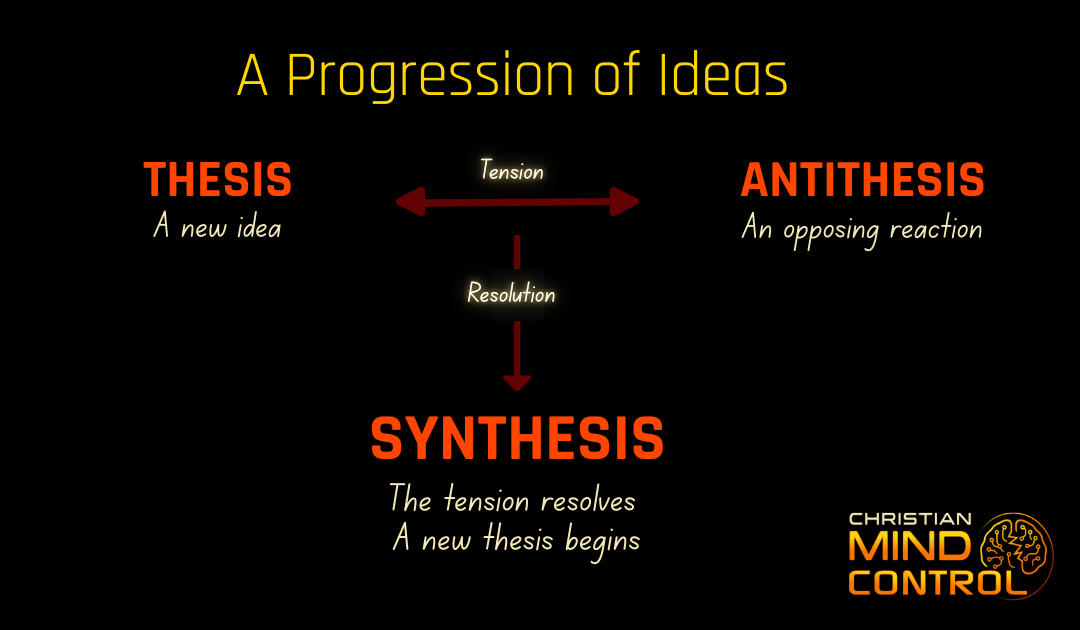
The term Hegelian dialectic is commonly used to describe a three-stage development of ideas: thesis, antithesis, and synthesis.
- A claim or event is introduced (thesis).
- Tension or opposition emerges (antithesis).
- A resolution forms that integrates or reframes the conflict (synthesis).
In philosophy, this describes the movement of ideas. In a public crisis, it often describes the movement of interpretation.
This mechanism does not require a conspiracy. It requires only that human beings prefer resolution to prolonged uncertainty. When a crisis hits, our minds seek stability. Competing stories create cognitive dissonance, the mental tension that arises when explanations contradict one another or challenge what we already believe. That tension is uncomfortable, so we look for resolution.
The narrative that arrives with authority and repetition often wins, not necessarily because it is true, but because it relieves the pressure of not knowing.
Basically, instability produces urgency. Urgency narrows patience. Narrowed patience speeds up acceptance.
Because this pattern is predictable, it can also be leveraged. Institutions, movements, governments, media systems, and ideological actors understand that crisis compresses discernment. Not every instance of narrative formation is engineered, but predictable human responses can be influenced.
That is where vigilance becomes necessary.
Stage 1 — Thesis: Event
Let me show you how this worked in recent history.
On September 10, 2025, Charlie Kirk was fatally shot while speaking at an outdoor campus event at Utah Valley University in Orem, Utah. Hundreds witnessed it.
In the first hours following the shooting, facts were still emerging. Yet discussion accelerated immediately across media platforms and through influential commentators. The crime scene was secured, processed, and cleared. Campus operations resumed while key questions were still being investigated.
The event itself functioned as a thesis. Something had occurred, and the public sought an explanation.
The interval between an event and verified clarity is the most unstable phase of interpretation.
Stage 2 — Antithesis: Conflict and Interpretation
Multiple versions of events circulated quickly. Early details shifted. Authorities arrested an older man, then hours later released him and arrested a younger man in his twenties. Reports indicated that a relative had contacted authorities with information connecting the younger suspect to the crime.
In the early stages, many commentators rushed to provide explanations to address the prevailing uncertainty. Interpretations were offered before legal proceedings were finalized, and sometimes before basic facts were confirmed. Competing narratives created tension.
This is the antithesis stage. It is defined by contradiction, uncertainty, and unresolved meaning.
The human mind does not rest easily in prolonged ambiguity. Cognitive tension increases the desire for consolidation. The longer uncertainty persists, the stronger the pull toward a stable explanation.
This pressure does not require hidden masterminds. It is part of human cognition. However, because these responses are consistent, they can be anticipated. And when reactions are predictable, influence becomes easier.
Stage 3 — Synthesis: Stabilization
We can trace the dialectic here without assuming intent.
Through repetition, a synthesis formed. One narrative gained dominance through media coverage, commentary, and social consensus before verification was complete. The version that sounded most coherent and settled became the accepted explanation.
Here, the dominant synthesis sounded something like this: a radicalized young man, acting alone, assassinated a controversial political figure at a college event. Law enforcement responded quickly. A suspect was identified. Justice was moving forward. The frame felt complete.
As that framing solidified, unresolved details became less central to the public conversation. Early confusion about arrests, shifting reports, and unanswered questions no longer carried the same weight. The explanation provided relief.
Relief often feels like clarity.
Over time, attention moved elsewhere. Whether every question had been examined became secondary to the fact that a stable story had taken hold.
Once that stability forms, new information is filtered through it. Revising it requires effort. Remaining uncertain requires endurance.
This is how synthesis stabilizes. It does not require coordination. It requires only that tension feels uncomfortable. When a coherent explanation arrives, most people adopt it, not out of weakness, but because resolution reduces pressure.
That is the moment that matters most. Not when the crisis breaks or when commentators debate. It is when the mind quietly decides it has heard enough.
Why We Accept Stories Quickly
Here is what makes this mechanism effective.
Crisis compresses time. Culture rewards speed.
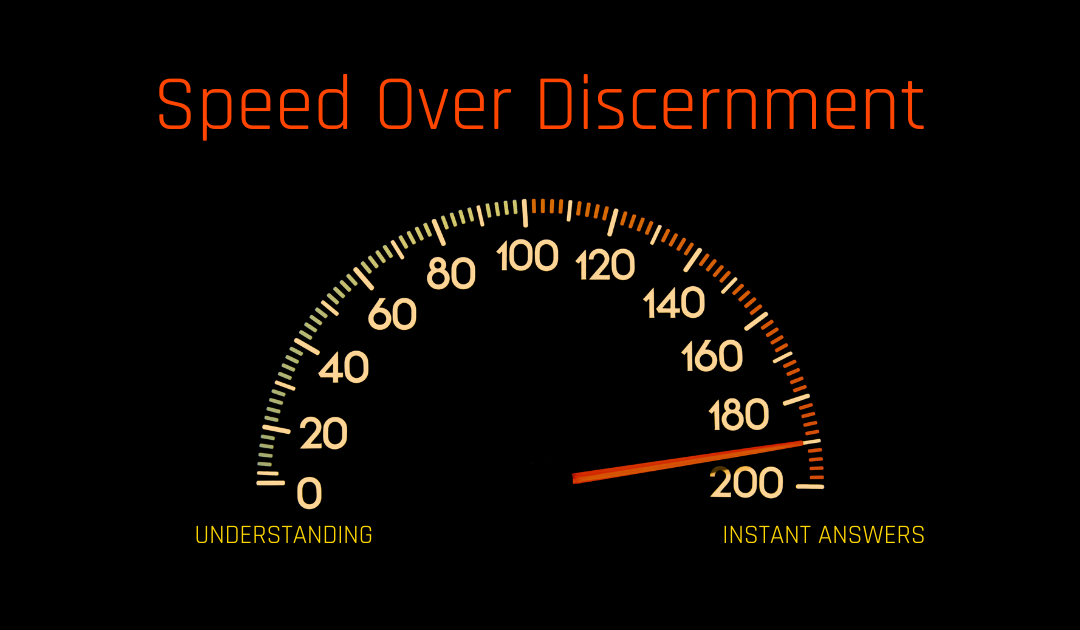
Together, they push interpretation ahead of understanding.
Our culture demands instant answers and emotional resolution. As a result, we are more likely to accept the initial narrative without examination and move on to the next crisis before we have processed what we witnessed.
The dialectic benefits from this dynamic. Our need for closure begins to outweigh our commitment to truth.
Over time, this pattern shapes thought. Thought repeated becomes belief. Belief repeated becomes attachment. And attachment makes revision costly.
The issue is not whether every consensus is corrupt.
The issue is how quickly examination is surrendered.
Why the Bible Warns Us to Stay Vigilant During Pressure
1 Peter 5:8 tells us to be alert and of sober mind, because our adversary prowls like a lion looking for someone to devour.
This is not language of panic. It is language of vigilance. It assumes vulnerability increases under pressure and emotional intensity.
The dialectic follows that same vulnerability. A crisis destabilizes perception. Competing narratives create tension. We reach for explanations that promise relief.
The pattern works because human reactions under pressure are predictable. We seek resolution faster than we seek truth.
Sober-mindedness is disciplined perception. It is the refusal to inherit conclusions prematurely.
The dialectic cannot complete its cycle when we refuse to move from tension to resolution on someone else’s timeline.
When we pause instead of reacting, we remain governed.
When we accept prematurely for the sake of relief, we surrender that ground.
The Bible does not call us to intellectual isolation or autonomous self-rule. It calls us to stewardship under God. The mind is not self-owned. It is accountable.
Free will is real. Responsibility is real. Discernment is exercised before God, not apart from Him.
Predictable human reactions can be influenced. That reality makes sober-mindedness essential.
When we trade discernment for relief, we trade sovereignty for comfort.
Where Has Synthesis Been Accepted Without Examination?
Before moving forward, pause for clarity.
Consider:
- When was the last time a conclusion was accepted within hours of a crisis?
- What made that explanation feel credible? Evidence, authority, repetition, or relief?
- Which sources receive automatic trust, and why?
- Has a publicly accepted narrative ever been revisited after additional facts emerged? Is social cost a factor in whether questions are raised?
- Is uncertainty more uncomfortable than being wrong?
These are not rhetorical questions. They are diagnostic.
They reveal where the dialectic may already be shaping our thinking, not because we are weak, but because we are human.
What Changes When the Mind Remains Governed
This is not a call to cynicism. It is a call to restraint.
Uncertainty can be endured without immediate consolidation. Competing explanations can be observed without forced resolution. Acceptance can be delayed until the evidence stabilizes.
Free will operates here. Each person decides when to adopt a conclusion and what standard of evidence is sufficient.
But that freedom functions as stewardship.
Authority over the mind is not independence from God. It is responsibility before Him.
The absence of urgency slows interpretation. Emotional intensity loses leverage. Social momentum loses some of its coercive force. The slowing down gives space to hear and gain clarity from God, which is so important in the discernment process.
The dialectical pattern still exists. But its power weakens when we slow down.
When urgency no longer dictates our timeline, emotional intensity loses leverage. When consensus forms more slowly and examination continues longer, influence has less room to operate.
Crisis will continue, and so will the narratives that rush in to explain it.
In the first hours after something breaks, urgency rises and temperature follows. Under that pressure, conclusions begin to feel necessary.
In the next crisis, the first act of sovereignty is not forming an opinion.
It is slowing your adoption of one.
But the real question is not whether tension will escalate. It always does.
The real question is what happens inside your mind when it does.
In moments like that, do you move because the volume increased, or because truth has actually settled?
With every headline and every repeated claim, the pull toward resolution grows stronger. Yet discernment does not require speed. It requires steadiness.
And steadiness, especially under pressure, is chosen.
So remember…
Control your mind, or someone else will.